Showing posts with label economics. Show all posts

Saturday, December 6, 2025

Solar Ceilings and Compounding Dreams

It is fashionable to wave away physical constraints with vague references to solar abundance and human ingenuity. Yet every balance sheet eventually meets a balance of energy. Solar photons may shower Earth with roughly 170,000 terawatts, but financial markets expect growth that compounds on top of itself forever. The math linking those stories rarely appears in the same paragraph—so let’s put them together.

Setting the Stage

I keep coming back to Tom Murphy’s dialogue in Exponential Economist Meets Finite Physicist. In Act One, Murphy plots U.S. energy use from 1650 onward and it traces a remarkably straight exponential line at ~3% per year. Economists in the conversation shrug; after all, 2–3% feels modest. But compounding at that pace means energy demand multiplies by ten every century. Our economic models implicitly assume something even more optimistic : 8–10% returns in equity markets, pension targets, and venture decks; without asking what energy supply function supports that.

Thermodynamic Guardrails

Murphy distills the second law of thermodynamics into plain language:

“At a 2.3% growth rate (conveniently chosen to represent a 10× increase every century), we would reach boiling temperature in about 400 years… Even if we don’t have a name for the energy source yet, as long as it obeys thermodynamics, we cook ourselves with perpetual energy increase.”

That thought experiment matters less for the literal 400-year timer and more because it shows energy growth must decelerate to avoid turning Earth into a heat engine. Solar panels, fusion, space mirrors … pick your technology. The waste heat still has to radiate away. We cannot spreadsheet, app and AI our way around Stefan–Boltzmann and Black Body radiation.

Solar Arithmetic vs Demand Curves

Let’s grant the optimists a heroic build-out: cover 5% of Earth’s land area with 20%-efficient photovoltaic arrays, assume a generous 200 W/m² average output, and we net roughly 20 TW—about the entire human primary energy demand today. That is fantastic news for decarbonization, but it is not a blank check for compounding GDP. If demand keeps growing at 3%, we would need 20 TW × (1.03)ⁿ in perpetuity. Within 250 years we’d be trying to harvest thousands of terawatts—orders of magnitude more land, materials, storage, and transmission than our initial miracle project. Solar abundance is real; solar infinity is fiction.

Finance Is an Energy IOU

Money is a claim on future work, and work requires energy. When pensions assume 7–8% annual returns, when startups pledge 10× growth, and when national budgets bake in permanent productivity gains, they are effectively promising that future societies will deliver 2–3 doublings of net energy per century. If we instead hit a solar plateau—because land, materials, or social license cap expansion—those financial promises become unmoored. We can pretend that virtual goods, algorithmic trading, or luxury desserts (to borrow Murphy’s Act Four anecdote) deliver infinite utility without added energy, but the chefs, coders, and data centers still eat, commute, and cool their CPU’s , GPU’s and Tensor processors. The intangible economy rides on a very tangible energy base.

Rewriting the Business Plan

Accepting a solar ceiling does not doom us to stagnation. It just forces different design constraints:

  • grow quality, not quantity—prioritize outcomes per unit energy … do proof of useful work rather that roll the dice and gamble.
  • align finance with expected energy supply rather than mythical exponentials … and I am not talking of wasting energy on crypto.
  • treat efficiency gains as buying time, not as a perpetual motion machine … if you learnt enough physics in high school to reject the perpetual motion machine, but have been lulled into perpetual 8% returns from the finance markets, there is a serious schizophrenia issue.
  • embed thermodynamic literacy in economic education so debates start from the same math.

Murphy ends his essay noting that growth is not a “good quantum number.” It is not conserved. Our job is to craft institutions, portfolios, and narratives that can thrive when net energy flattens, because physics already told us that day will arrive long before our spreadsheets hit overflow errors.

Thursday, May 15, 2014

All over Cambodia in 3 weeks - Siem Reap

Last December and January I cashed in my annual leave and some more to go travelling in Cambodia for almost a month.

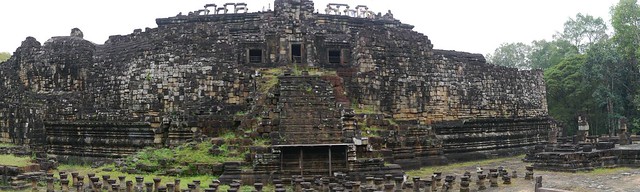
The fantastic ancient temples of Siem Reap cannot be quite enjoyed in a day, but in one hectic day starting in the dark at 5am we came quite close. Pity the $30 extracted from millions of tourists every year ends up in the hands of a Vietnamese contractor.Baphuon sleeping BuddhaWe managed to visit the impressive Angkor Wat before a rather lack luster sunrise due to the clouds. Then off for a jaunt on the tuktuk through the myriad temples of Angkor Thom. Finally we managed to convince the reluctant driver to make the long trip to Bantey Srei (The Women's Temple) and admired its beautiful carvings as the sun set. Apsara Detail
The night in Siem Reap is an entirely separate experience all by itself. Where the temples show the grandeur of ancient Cambodia, the Night Markets and Pub Streets of Siem Reap reflect the vital resurgence modern Cambodia is exeriencing from the decades of bloody civil war. Granted most of the industry is rather grey and exploitative in nature, it is still good to see haggling in the market and mass production of temple based artwork from a few originals made by actual masters.


All told I would have loved to stay in Siem Reap for a month to catch the perfect sunrise over Angkor Wat and the perfect sunset over Bayon, and indulge in the debauchery in pub street every night.

Friday, December 13, 2013

A few days in Samoa - Reefs, Thieves and Blue waters

We went to Samoa (the Western one not the American one) for a few days to experience sun, surf and the typical tropical paradise things. However paradises are very fragile, snorkeling is difficult since reefs are dying after a tropical cyclone, which flattened some of the best resorts.
Beach Fales
Beach Fales along the Eastern shores of Upolu

Churches are everywhere, our resort was right next to a very large Methodist compound. The biggest building in Apia is probably the L.D.S. church with a shiny top. In spite of all the religious zeal the commandments are not obeyed, we had been warned about theft at the resort by TripAdvisor and it did happen. Some money disappears from our resort room, the police got called in to take statements from the staff. Only fair given Australian Federal Police is shoring up the policing in Samoa.
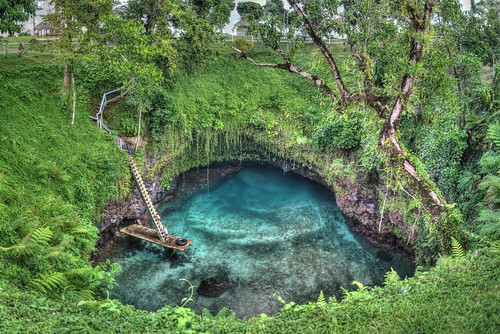
To-Suo Swimming hole
The To-Suo water hole at low tide

We drove around for a couple of days, getting througly lost and finding some wonderful places. Samoans only started driving on the left side of the road recently and about 50% of the cars are still left-hand drive, sharing the road with them is dangerous at best. I went off road for a bit and managed to get stuck in mud in pouring rain. A local thankfully came by and helped us extricate the car with some well placed planks.

Eventually we got to To-suo after repeated searching at opposite ends of Upolu. I had a stroll through the Livingstone museum and took photos of falls at sunset. Ate greasy food at the local market, stared at huge taros and rode the local bus (one of which was swept of a ford by a river the day after we left). I was a fun holiday overall.
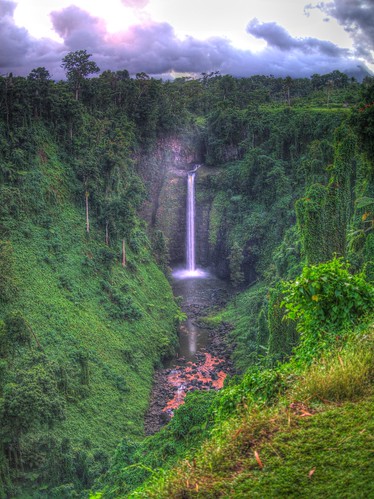
Sopoaga Falls
Falls near Falefa

Saturday, November 23, 2013

All forms of LTC mining - CPU and GPU (OpenCL/CUDA)

CPU mining is definitely deprecated. You never get the bang for power, unless you have machines with 32 cores and free power. Well at least for BTC. For LTC cpu mining (very slowly) is still feasible. Quite good if you have one of those 32 core - 128GB RAM beasts lying idle, or you are Amazon or Google. Just fire up pooler's minerd and take up a bunch of CPU's. A little bit of math shows EC2 CPU power will not be worth the investment, but with LTC prices heading north of $10 theres is no telling what people will try - including writing minerd into viruses. Amazon might stop EC2 service and start CPU/GPU miners itself.

CGMiner 3.7.2 with scrypt support can also get a fairly good rate on AMD Radeon cards with better OpenCL support. The ROI on these cards is definitely better than any of the miners in hand. Meanwhile people are pay AUD700 for 5GH BFL Jalapenos on ebay and joining the BTC bandwagon. Fun times ahead.

I am enjoying myself trading LTC/BTC and getting cheap thrills on penny stocks. Much better than when my horse (Verema) came last at the Melbourne cup, stumbled fell and had to be put down. I still won for last place. Even if like the horse, this vaporware currencies stumble fall and have to be put down they will leave behind legends and fiat currency millionaires.

Monday, November 18, 2013

Coming late to the party - Coin mining

Deep in the days of custom built ASIC miner boxes, mining with USB miners and hubs is considered a waste of electricity. Unless of course you are the government and own Three Gorges, still large miners are more efficient. Still I needed to get started and picked up a bunch of now collectors item - Icarus USB miners of eBay. Cgminer makes these really easy to use, with proper modules (in linux) or usb driver substituion with Zadig.

Next comes the fun part, choosing a pool to mine at. All say they are fair and there are so many pay-out algorithms, worth a PhD in economics by themselves for rewarding people for work done. Eligius has the CPPSRB, Bitminter uses PPLNS with donations. Some support all SHA256(SHA256) based coins, both BTC and NMC. Miners practice aggresive pool hopping (and currency hopping) to pick up the one with best luck. Some pools require registration, other just the payout address. All fertile ground for bots to play at.

After playing with BTC for a while I looked into LTC. Since it is still mined on the GPU (with scrypt CGMiner 3.7.2) and has less aggresive speculation. It might also just become irrelevant, but not being mainstream has some allure. Indeed these are the days of panning gold in early California or even closer to home at Eureka. Individuals issuing currency causes some disruption to monetary policy and governance. May be there will a tax put on selling mining ASICs, similar to a mining licence. Overall it is an intersting economic experiment.

Saturday, October 20, 2012

Why is gold valuable anyway ? - Midas and Supernovas

Growing up as a child in India in a family of goldsmiths it is hard to ignore the role gold plays in perception of wealth and daily conversation. My uncle would often refer to "stuff" or "maal", meaning gold. On my last visit the regular obsession was checking the current gold price from the wholesalers via SMS. According to a recent article - Man's addiction to gold - India holds pretty large stockpiles of the metal in the proverbial family jewels. It changes hand at marriages as gifts and dowry.

Midas as an allegory of a supernova Gold has no intrinsic bio-chemical value which supports life as the cautionary tale of King Midas points our. Its inherent inertness however gives it great value in the burgeoning electronics industry and it is very rare to start with anyway due to the cosmic element forming processes making it harder and harder to produce heavier elements. The vagaries of nucleosynthesis are so universal that they have even made it to being a Hollywood plot device in "Cowboys and Aliens" where aliens set up a gold mine.

The ultimate statement on how we value things comes down to supply and demand - gold is in short supply due to its nuclear weight and on high demand due to its permanence once acquired. We now just need to find suitable biochemistries or bioelectronics to make it part of a living body. Gold abundance is a measure of the midas touch of supernovas.

Sunday, April 15, 2012

Things we do for money - beg, borrow and steal

When I was a child we used to catch the train every morning from Bali station to Howrah, you have to travel long ways at times to go to a good school in India. At the station there usually was a strange man sitting beside a very large pile of hay, gobbling it up. Hay is relatively cheap, but I am sure it is very hard to digest without 4 stomachs and a coterie of symbiotic bacteria. Yet day after day this man sat and ate hay, people were suitably amazed and gave him money to buy more hay. The same applies to performers of any kind, once our stomachs are full of suitably nutritious food (not hay), our minds seek fulfillment as well. We want to be amazed by something extraordinary, stay in touch with people we care about, gloat about the misfortunes of those we hate or envy. The brain feeds on these emotions and burns up the glucose we have consumed.

Fiat currencies have the great blessing of being pure invention, the state says let it be so and money exists - fiat lux. Since the Nixon Shock, currencies are disconnected from materials but attached to emotions and ideas. The society is a very large Markov network, with beliefs about value propagating through every conversation. True value or even truth itself is merely the best presented propaganda. The chinese are no stranger to the vagaries of economy having established the first known instance of paper money, and messed it up through hyperinflation and lack of sovereign discipline.

Content producers directly communicate with our minds through our senses and artists hold the strings to our happiness in their hands. We dance like grand marionettes to the messages being relayed through bands, movies, TV, radio, facebook, churches and Harry Potter novels. We spend money, a product of human ingenuity, on other products of human ingenuity. Last night I attended a small get together, Fee an artist and a friend is garnering support to travel around Australia generating content regarding digital culture. She is being shy about begging for money, but we had to point out to her that she is only begging for it from people who begged, borrowed or stole it in the first place. It is not even begging, it is only borrowing so that she can produce content which will engage people and keep them happy for years to come. We can have better stuff than "Hay" content.

If we, citizens, do not support our artists, then we sacrifice our imagination on the altar of crude reality and we end up believing in nothing and having worthless dreams.  - Yann Martel

Wednesday, January 18, 2012

Truth, justice and Edwin Howard Armstrong - SOPA and PIPA

There is so much bruhaha going on about IP protecting and SOPA, PIPA and other supposedly good things designed to keep us safe, just as a straight jacket is designed to keep the violently insane safe. Whenever the topic of protecting your ideas comes up I always give the example of Edwin Howard Armstrong ( who I refer to as EHA), the genius who could explain physical devices other people had made and ended up being rewarded the patent for FM Radio.

Here comes the clincher, this patent made him an millionaire, but he also lost his millions defending his patent and ended up jumping out of a window. The system, in this case the legal system, is designed by those already in power to maintain the status quo i.e. they remain in power in perpetuity. When EHA's FM threatened the established AM empire, the emperor encouraged people not to pay royalties for the use of the FM technology.


Similarly if a co-operative content creation studio which uses a different (read more mental world as opposed to physical world) distribution and monetisation approach compared to the current studios, they will be victimised to a point where they will voluntarily defenestrate themselves. After all those living in the content creation Shangri-La live beyond the monetary system and trade in reputations instead, money is only really useful for getting things from those who do not really know you - Asiyekujua hakuthamini.

Analysing the Facebook Fisheries - Fishbook

I had an economist for a housemate for a few weeks. Zidane is from Brest and he is doing a PhD on the French fishing system, quota allocation regulation etc. It would have been good to stay in touch afterwards since I am interested in control systems in general, even large ones like the European scale fishing quota system. Zidane has strong views about Facebook and does not subscribe to it, so email will have to do.

While translating his paper we developed a fishing metaphor for how Facebook operates and how it creates value in the market. The basic analogy is this:

Fish\Squid == Personal Information.
Bare site == Lure.

At this time of the year the CSIRO water frontage is crawling with people lure fishing for squid. The squid will bite anything shiny. If people want to fish for other species, they cut up the squid and use it as bait for bigger fish. Facebook operates in a similar manner. The basic site acts as a lure for early adopters who get hooked on anything shiny - Kipya kinyemi kingawa kidonda. Once their personal information is in the net e.g. their relationship status - others take the bait and release their information into the trawler.

Ultimately a big catch of personal data gathers in the net and after some statistical discard the nuggets can be sold to corporations or even the government.

Wednesday, January 4, 2012

The Swansea Adventure

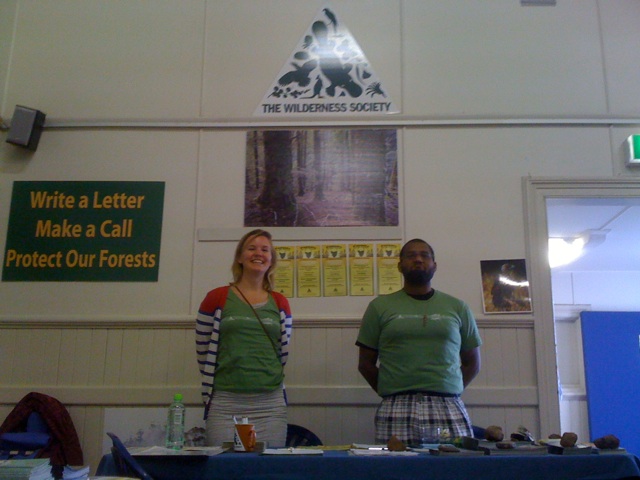
A few weeks ago I volunteered to take a trip to Swansea for The Wilderness Society and promote a town meeting regarding the Inter Governmental Agreement. We had a stall at the market in the town hall, among hand made craft items, food and a campaign to save plovers run by a CSIRO colleague. Jeanette and Amy did most of the hard work while I was dancing around town letter-boxing. Amy took a spider out of the canteen area to save the children from this deadly beast and became a heroine.

The petrol stations do not like the wilderness society, at the Caltex I was simply turned away with a "We do not support the wildos", at the BP a longer conversation ensued:

Him:"Go away I don't like the greens" 
Me:"Why not?" 
Him:"You are sneaky, we have been logging for thousands of years" 
Me:"You haven't been here for thousands of years" 
Him:"What do you want us to do if we stop logging ? Sit by the roadside and weave wicker baskets ? " 
Me:"You will leave basket weaving to people like me in the 3rd world ?"
Him: "What are you on dole from the government ?" 
Me: "No I am a highly paid scientist" 
Him: "Go away!" 
Me: "You don't have to be green, your petrol station is" (Parthian shots are awesome).

On the other hand there are some great people in Swansea such as the owner of The Ugly Duck Out who are doing their best to balance the economics and environmental impact of their business. I guess some people do not realise that there is a thing called the triple bottom line and money is not the only thing in the system.