Showing posts with label philosophy. Show all posts

Friday, May 29, 2026

We Don't Have Hooves: AI Logos, Cognitive Shedding, and the Exoskeleton Economy

I spent a weekend writing a small Rust tool that composites AI company logos onto a Redbubble full-print t-shirt canvas. Not because anyone asked. Halfway through tuning the layout I noticed something faintly absurd: every logo I was tiling looked like a tyre tread. OpenAI’s swirl is a directional rain pattern. Gemini’s four-pointed star is a Bridgestone Blizzak winter sipe. Anthropic’s ringed A is a sidewall stamp. Nvidia’s eye is a hub cap. Lay them next to each other on a 7000-pixel canvas and the whole thing reads less like an industry portrait and more like a Beaurepaires catalogue page.

Logos From Loops

The visual grammar of AI companies has converged on a small family of forms: radial symmetry, interlocking arcs, gradients from cool to warm, the occasional offset chevron. They are tread patterns. They are tread patterns because tread patterns are what you draw when you want to suggest motion, grip, and continuous contact with a surface you are moving over – which is exactly the brand promise of a model that turns prompts into outputs without you needing to know how the road underneath works.

The tool generates 21 of these tread-pattern logos – the leaders, challengers, niche players, and visionaries from the April 2026 Gartner Magic Quadrant for Enterprise AI Coding Agents, plus the dozen companies tracked by isaiprofitable.com – and tiles them across the canvas under four layouts: a jittered grid, a hex pack, an arabesque mask built from Lissajous curves under a wallpaper symmetry group, and a Voronoi packer that wraps cleanly at the edges. The arabesque mode is the one that looks most like a real design, which is fitting because the brand identities themselves are arabesques of the same underlying motif.

Nothing in the code is novel. What is striking is how little code it takes to produce something that passes for a branding agency deliverable. Spend a few minutes tweaking curve density and symmetry group and you can cover most of the Fortune 500’s recent AI rebrand portfolio without engaging a designer. None of it requires aesthetic judgement. All of it requires a loop.

That is worth sitting with before moving on to the money.

The Gartner Thermometer and the Sequoia Deficit

The 2024 and 2025 Gartner Hype Cycles placed generative AI at or near the Peak of Inflated Expectations, the top of the curve before the long slide into the Trough of Disillusionment. That topological framing is rough but useful. More arresting is the arithmetic underneath it.

Sequoia Capital published a piece in mid-2024 estimating that AI infrastructure – primarily Nvidia GPU clusters – required roughly $600 billion in annual revenue to justify the capital being committed, while observable AI-attributable revenue across the industry was a fraction of that figure. The gap has a name in finance: “productive deployment lag.” In plain language: the shovels are being sold, the mines are being dug, and the gold has not appeared at the rate the tunnel length implies it should. On isaiprofitable.com, the only company with a green checkmark next to its name is Nvidia, the one selling the shovels.

The 21-tread-pattern t-shirt is a small monument to this gap. Nvidia at the hub, eleven others on the sidewall burning through capital at rates that make the GPU revenue arithmetic interesting, one wallpaper symmetry group holding them all together on a cotton substrate.

The more interesting question is not whether AI is profitable yet. It is why AI is already affecting how we think, even before the P&L sheets catch up.

The Fur Analogy and Cognitive Shedding

Around 1.5 million years ago, Homo erectus started losing body hair. The proximate cause was almost certainly thermoregulation: an upright, running hunter on the African savannah generates core heat faster than a fur coat can dissipate it under midday sun. So the fur went. But heat still needed managing. The solution was clothing, an external thermal regulation artifact that did the job the body had previously handled internally.

This is a pattern that runs through the entire history of human technology. We replace innate biological functions with external artifacts. We then build manufacturing chains around those artifacts. We build economic systems around those chains. The original biological capacity atrophies from disuse or is simply never developed in the first place, because the artifact is already there when the individual arrives.

We do not have hooves. We have shoes. We do not have gills. We have submarines. We do not have the magnetoreceptors that birds use on migration routes. We have GPS. In each case the external artifact is not merely a substitute; it is a platform. It invites elaboration. The shoe becomes the boot, the boot becomes the orthotic, the orthotic becomes a running shoe industry, and the running shoe industry eventually funds the biomechanics research that feeds back into the next generation of the artifact.

I spent six months in late 2022 and early 2023 as an Enterprise Architect contractor at Bridgestone Australia in Adelaide, wiring up the interfaces between SAP, Salesforce, and the mobile mechanic booking platforms that schedule a van to a customer’s driveway to swap a set of tyres. The work was unglamorous integration plumbing – canonical data models, idempotent message contracts, the usual distributed-systems hygiene – but it gave me a tourist’s window into how a tyre and car parts business actually operates. Every node in the system was eventually a physical thing: a passenger radial sitting on a pallet in a Wingfield warehouse, a wheel alignment slot at a Beaurepaires bay, a truck retread coming back from its second life on a B-double. The software was a thin coordination layer over a very heavy industrial substrate.

The history of the company that owns that substrate is the part that stuck with me. Bridgestone – ブリヂストン – started in 1931 not as a tyre company but as a spinoff of a 久留米 (Kurume), 九州 (Kyushu) maker of 足袋 (tabi) split-toe footwear. The founder, 石橋正二郎 (Shojiro Ishibashi), had been adding rubber soles to cotton tabi since 1923 under the Asahi brand, and rubber soles turned out to be the gateway material to rubber tyres. The name Bridgestone is a literal English inversion of his surname: 石 (ishi, stone) and 橋 (hashi, bridge), reversed and translated, picked partly because it sounded export-ready and partly to echo Firestone, the American tyre company he admired. (Bridgestone would eventually acquire Firestone in 1988 for $2.6 billion, which is the kind of historical loop that only happens in long-lived industrial companies.) The katakana spelling ブリヂストン preserves an archaic ヂ where modern Japanese would write ジ, a piece of pre-war orthography the brand keeps the way Mitsubishi keeps its three diamonds.

What I took away from those six months is that Bridgestone is not really a tyre conglomerate that used to make shoes. It is a rubber compounding and supply-chain organisation that noticed rubber was useful for several different external human exoskeletons – first feet, then cars, then conveyor belts, hoses, seismic isolators under buildings, and now sustainably-sourced guayule and dandelion-derived natural rubber to hedge against Hevea brasiliensis geopolitics. The material is the through-line. The product is whichever exoskeleton the century happens to need.

I always jokingly refer to BridgeStone as - “Big Rubber”.

The Car Was Always an Exoskeleton

The automotive vocabulary has colonised AI discourse so completely it has become invisible. We “steer” language models. We apply “guardrails.” We talk about “autopilot” and “co-pilot” and “lanes” and “on-ramps.” There is a vehicle for sale right now whose entire value proposition is that the steering wheel becomes optional once the AI is mature enough. Almost nobody stops to ask why this particular metaphor landed so naturally.

Here is one answer: cars and AI are both exoskeletons.

A car is not a vehicle in the narrow sense. It is a kinetic exoskeleton that extends the range, speed, load-bearing capacity, and weather tolerance of a soft-bodied primate who would otherwise top out at 5 km/h on a good day. The car does not move instead of the human; it extends the human’s movement by several orders of magnitude at the cost of an elaborate support infrastructure: roads, fuel networks, insurance markets, traffic law, emissions regulation, and, yes, tyre companies.

AI is doing the same thing to cognition. The language model does not think instead of the human; it extends the human’s language-generation and pattern-retrieval capacity by several orders of magnitude at the cost of an equally elaborate support infrastructure: GPU clusters, training pipelines, safety teams, regulatory frameworks, and eventually a Gartner hype cycle or two. The car vocabulary arrived so naturally because the thing being described was already familiar. We built the kinetic exoskeleton first. The cognitive one came later, but the shape of the dependency relationship – human plus artifact plus infrastructure – is identical.

What Gets Shed

The cognitive functions most visibly affected are the ones that involve generation under uncertainty: drafting a first sentence, naming a variable, composing an email, sketching a logo. These are precisely the tasks that feel slow and effortful without assistance, and precisely the tasks that AI handles smoothly. The friction is real. The assistance is real. The atrophy risk is also real.

Musicians who practise scales develop neural pathways that do not form if the scales are skipped. Writers who struggle through first drafts develop a tolerance for ambiguity that does not develop if a model always resolves it for them. The logos from the code above look entirely plausible. They look like every other AI logo in the current design vocabulary. They were generated without any cognitive friction whatsoever, which is both the point and the problem. The friction was where the design decision lived.

This does not mean AI assistance is bad, any more than wearing shoes is bad. It means the physiotherapy question matters: are you also doing the cognitive equivalent of the exercises that keep the underlying capacity from going the way of the body hair or your quads since you have spent 2 days chasing the zebra you speared and are waiting to run out of steam and die.

The Shoe Company Principle

Ishibashi’s insight in 1931 was not that feet needed covering; the Asahi tabi side of the business already had that locked up. His insight was that rubber was a platform material for exoskeletal extension, and that the same compounding science, vulcanisation know-how, and distribution muscle that made a good rubber-soled tabi could make a good passenger tyre. He followed the material from one form of human locomotion extension to the next, and a hundred years later that bet is still paying out across tyres, conveyor belts, and seismic isolators.

The AI companies following the GPU stack from language generation to reasoning to planning to embodied robotics are doing exactly this. The H100 is the rubber: a platform material whose applications are not exhausted by the first product built on it. The chat interfaces, the co-pilots, the logo generators – these are the 足袋. What comes next on that manufacturing chain – the 自動車 (jidousha, automobile) tyre equivalent for cognition – is the part worth watching, and worth surviving the trough of disillusionment for.

Whether the current crop of AI businesses is profitable by the time the next Gartner report drops is the wrong question. Whether the infrastructure being built can outlast the hype cycle long enough to produce the genuine platform shift is the question Ishibashi would have asked, probably while measuring rubber tensile strength in a factory that used to make footwear. Japanese has a phrase for that patient industrial cultivation: 改善 (kaizen, continuous improvement). It is not the same word as ハイプ (haipu, hype), and the two have rarely been observed in the same building.

The last shoe company that asked the wrong question about its own product is still making pneumatic rubber cylinders for the machines that replaced the horses we no longer needed to breed. Every AI logo on the t-shirt is a tread pattern drawn by people who do not yet know which century of exoskeleton they are designing for. That beats a PowerPoint ecosystem built around the profitability question, and it is the bet I would rather be inside of when the trough arrives.


The code is at ai_logos_shirt – a small Rust crate, MIT licensed, build instructions in the README. Ping me if you have strong opinions about cognitive atrophy, the Sequoia revenue gap, or split-toe rubber footwear.

Friday, July 6, 2012

Rage against the machine - Pattern Matching

One of the major strengths (and sometimes weakness) of the human brain is its ability to perform pattern matching - the classic is where people play more attention while playing games and digitising and gamifying the airport security leads to less false positives. We perform heuristics in everything we see and hear, often coming to conclusions based on partial information, based on extrapolation performed using past experience. This is why upper-case letters in English are so much easier to read since we have built up heuristics to infer the letter from the top-half, people who write in all capitals seem to be almost shouting as our visual heuristics take the cue.

Ambiguous painting
Machines are getting better at the heuristics as well as brute force, we have passed them on just the way we pass on preconceptions of right and wrong, beauty and religion to our children. Based on this system of thought and accumulated body of knowledge, machines can perform pattern matching tasks they are programmed for in vastly superior ways than humans. All they demand in return is energy, materials to build them and intelligent human beings to make some long intellectual marches in programming them.
Cat videos are the dominant species
In someways the rote jobs of pure pattern matching has made us mental Neanderthals with short neural loops focused on ambush hunting only the job at hand, rather than thinking long term strategy. The long chase where all the short easy pattern matching jobs have been mechanised is for the more creative, the artists. Yet there is still need for the engineer to keep the machines functioning. There are always predictions of race of against the machines. We still need to communicate our mental models imperfectly via whatever means.
Genies are just machines with Genius

May be with exposure to lots of cat videos and artwork, the machine will eventually learn to play with cats while painting, and we will keep building bigger machines since we can't be born biologically with bigger skulls or weild GeV's with our finger tips.

Saturday, June 9, 2012

Go back to PvE - fighting each other vs conquering the universe

In Hobart I used to hang out often at the Dr.Coffee. One Sunday I was sitting around drinking coffee and sketching, I met somebody preparing a lesson for a church gathering. We started talking about what each of us did and eventually I started describing, 3D modelling and game design. How a game has to have balance, PvE (player versus environment) and PvP (player versus player), how often at low levels the player is made struggle against the environment and some choose to keep doing it or on a game like Guild Wars with low level cap they choose to play PvP after having attained a certain level. Keeping on playing against the mind less monsters in the environment is considered grinding or farming, and generally looked down upon, unless you are a gold farmer who exchanges game gold for real world gold.

At the end of this conversation the believer in God left me a few words - "While you design and play games do not forget who designed you and which game you are living in.". This theme has been a common refrain since the advent of gaming. The overlap between virtual worlds and the real world is growing and is captured in a lot of cyber punk such as REAMDE. Currencies are changing hands by being sacrificed to gods in game world only to be converted to fiat in real world. Religions pose a similar dogma in real world, proposing to convert our material wealth, faith or in certain cases lives to real wealth for our players in some world beyond this one. The central premise being this is sort of a game world and we should indulge in PvP against players of the opposing team(religion, colour, nation, whatever label seems appropriate) to earn points, which will be converted to rewards in the world in which this simulation is running. The grand illusion of material world ideas have been around for a while, not as long as the 14billion year long illusion, but if you believe in such weirdness, time itself is an illusion anyway.

We seem to have reached a level cap for the time being in our evolutionary progression and become so heavily embroiled in PvP i.e. taking it out on each other that we have no time to engage in conquering our environment and making our society stronger. Widening our play ground, instead of squabbling over the invididual grains of sand in the sand pit. There is a favourite refrain among elite PvP players - "Go back to PvE". The politicians, financial magnets and all those playing to beat other humans in the game of life are PvP players looking down on those attempting to conquer the environment, be it in exploring new frontiers in medicine, space or fabrication.

If this does happen to be a game, why not figure out the mechanics first and become masters of the environment before going around shouting from roof tops about religion and judgement day, and why we should serve the games master i.e. a deity if we want to finish with a good score. We should just get along and keep playing the game of life, all eschatology aside. Our indulgence in gaming world seems to have helped in expanding the boundaries of real world through the likes of Elon Musk, we just need more people to stop playing against each other.

Sunday, April 15, 2012

Things we do for money - beg, borrow and steal

When I was a child we used to catch the train every morning from Bali station to Howrah, you have to travel long ways at times to go to a good school in India. At the station there usually was a strange man sitting beside a very large pile of hay, gobbling it up. Hay is relatively cheap, but I am sure it is very hard to digest without 4 stomachs and a coterie of symbiotic bacteria. Yet day after day this man sat and ate hay, people were suitably amazed and gave him money to buy more hay. The same applies to performers of any kind, once our stomachs are full of suitably nutritious food (not hay), our minds seek fulfillment as well. We want to be amazed by something extraordinary, stay in touch with people we care about, gloat about the misfortunes of those we hate or envy. The brain feeds on these emotions and burns up the glucose we have consumed.

Fiat currencies have the great blessing of being pure invention, the state says let it be so and money exists - fiat lux. Since the Nixon Shock, currencies are disconnected from materials but attached to emotions and ideas. The society is a very large Markov network, with beliefs about value propagating through every conversation. True value or even truth itself is merely the best presented propaganda. The chinese are no stranger to the vagaries of economy having established the first known instance of paper money, and messed it up through hyperinflation and lack of sovereign discipline.

Content producers directly communicate with our minds through our senses and artists hold the strings to our happiness in their hands. We dance like grand marionettes to the messages being relayed through bands, movies, TV, radio, facebook, churches and Harry Potter novels. We spend money, a product of human ingenuity, on other products of human ingenuity. Last night I attended a small get together, Fee an artist and a friend is garnering support to travel around Australia generating content regarding digital culture. She is being shy about begging for money, but we had to point out to her that she is only begging for it from people who begged, borrowed or stole it in the first place. It is not even begging, it is only borrowing so that she can produce content which will engage people and keep them happy for years to come. We can have better stuff than "Hay" content.

If we, citizens, do not support our artists, then we sacrifice our imagination on the altar of crude reality and we end up believing in nothing and having worthless dreams.  - Yann Martel

Saturday, February 18, 2012

Five favourite things - Mate selection criteria

Being a citizen of the world is nothing new in my generation. I was born in Kolkata, India, grew up and went to high school in Juja, Kenya and I have spent a great deal of my later life in Adelaide, Australia. It however does make it difficult to have a cultural identity and the answer to "Where are you from ?" takes about 5minutes. Lately my parent has been on my case to get a traditional girl from my community. Being rather untraditional and free-wheeling, while appreciating the depth of knowledge  in the rather ancient culture(this culture is rife with philosphers and mathematicians - students of the zero) I was born into is hard work. It is so much like another old culture, the Egyptians, where the Pharaohs only marry within the family. So I have resorted to setting little tests for prospective partners. Here is one a girl had set in the Hobart Art school (it could have just been a griefer).

A while ago a friend showed it to me. So I have listed 5 of my favourite things (Modern States of Matter - Classical Elements):
  1. Plasma - Fire
  2. Gas - Air
  3. Liquid - Water
  4. Solid - Earth
  5. Bose-Einstein Condensate - Quintessence
If your 5 favourite things match with my 5 favourite let me know. I so do not want to get into the Pharaonic tradition of having to marry only within your family.

Thursday, February 16, 2012

Big Bang Theory - The Trouble with Physics

"Big-Bang Theory" - the TV Series stereotypes physicists (theoretical and experimental), jews and engineers, indians and astrophysicists, artists and comic book fans. In spite of all the hilarity, it continues to provide valuable education to the masses concerning the nature of science and the pursuit of loftier goals than scoring digits in a system of value put in place by previous generations, also called the financial system. Bits of science exposed in the series tend to focus attention and promote question from the masses who are addicted to technology (and passive entertainment).


In the current age, technology is understood by very few of the users. We behave like priests or wizards and wave a wand saying it is too hard for you, sometimes the ignorant population has no choice to simply believe you on "faith", or burn you at the stakes as a "witch/wizard". It has come to a point where we might need to start creating technology courts for all the frivolous law-suits brought by patent trolls, where the jury is selected from those in the know, rather than the general population. We techies are becoming something like the Morlocks. A sub-culture on its way to becoming a sub-species. But again according to "Big-Bang Theory", there is hope. Once in a while a Morlock can kidnap an Eloi, and the current Morlocks are still building the machines that make life simpler for the Eloi. Dystopian projections from authors travelling into possible futures in their mind based on current social scenarios may act to change the sequence of events and human evolution, even more than actual time machines. Some diversity is always going to arise, we are Darwin's Finches.


Above all though there is the lingering discontent among physicists, The Trouble with Physics brought this to public attention for a while. The trouble is still brewing, we have not had experimental validation of the mathematical house of cards a lot of theoretical physics rests on. May be the LHC will lead to the construction of a time machine and put everything to rest by sending a message to the Mayans in Mexico.


“Because time travel is limited to these special particles, it is not possible for a man to travel back in time and murder one of his parents before he himself is born, for example. However, if scientists could control the production of Higgs singlets, they might be able to send messages to the past or future.” - Thomas Weiler

Tuesday, February 14, 2012

Charity begins at home - Compassionate Fatigue


An NGO worker used the words "compassionate fatigue" the other day. I am still coming to grips with the term. Last few days in Kolkata is giving me a real understanding of it. There is so much imbalance in the world that looking at it gives as vertigo, so we would rather look away. We slowly step away from the cliff and look up towards those who seem better off (left side), so that we don't have to look down the cliff into the abyss (right side).
Kolkata is the city of my birth, visiting it after living in Australia for the last 10 years is giving me real perspective on the systems of the world. So much is determined by causality or what I call the "Luck of birth". No wonder many Asian cultures obsess over astrology and the alignment of the planets at the moment of birth. In reality a new mother needs to do no more than look around the place they have given birth and the epoch of history to get an appreciation for what her child's life is likely to be like. The bastis (slums) are next door to new apartment blocks made of steel and concrete, commodities for which the modern Indian gods (Cricket players and Movie stars) act as posterboys. A child born in Kolkata today can choose to be a base jumper or a climber, of real building or of the social pyramid scheme.
Yesterday was Valentine's day, St. Valentine has finally made his way to Kolkata from Rome. Couples were sitting in the garden outside Dakshineswar (God of South) Temple. Exchanging sweet nothings, plotting the continued exponential growth of the Indian population, perpetuating the pyramid scheme of the world by building more bricks at the base of the pyramid. May be one of those bricks will grow a few wheels or sprout wings and hop off to the top tiers of the pyramid, if only to act as a sentry to block any other bricks trying to work their way up.

Friday, February 10, 2012

M.C. Escher and E.A. Abbott - Projection, Vision and Flatland

No one has played with our mind and sense of sight and explored how we see lines, curves, light and shadows like M.C. Escher. Even today Escher's infinite staircases seep into everything in modern culture, like maze designs in Inception. The drawings only make sense if you regard them just as projections rather than reality in 3 dimensions. This is a patent failing our senses have, we often mistake the perceived reality in 3 dimensions to be the actual reality which requires at least 4 dimensions according to Einstein, and even more according to the cabal of theoretical physicists seeking a unified theory of everything.

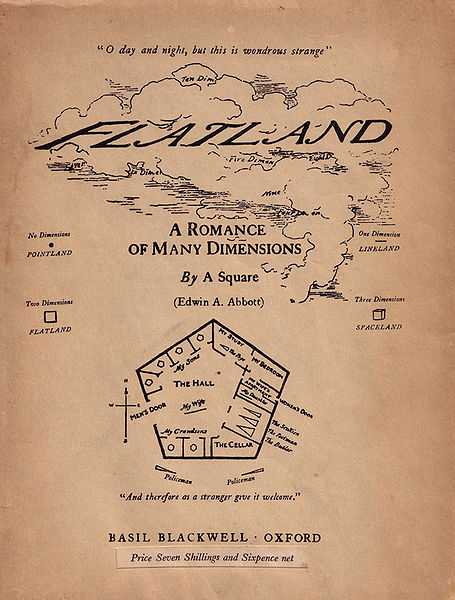
"The elimination of the logical inconsistencies [requires] rejection of our ordinary concepts of space and time, modifying them by some much deeper and nonevident concepts." - Matvei Petrovich Bronstein. Even a grand mind like Bronstein's cannot escape the vagaries of his time and escape from a firing squad. The ideas of conditional backgrounds and background independence are quite old. Including the mathematical and social treatment of dimensions by E.A. Abbott in "Flatland".

Let's hope "A Square" physicist in our 4-dimensional space-time land gets a revelation from a hyper-sphere and lays to rest the ghosts Einstein has conjured up from the manifolds of the universe.

Sunday, January 29, 2012

Last days in Hobart - Keeping little momentos

I had an exciting last week in Hobart. I made a necklace from things found in the IXL courtyard just to take things from Hobart with me, it forms a grungy addition to the Ethiopian coptic cross.

Checked out of the nicest house I have ever lived in , Derek and Cate have been the nicest landlords imaginable. They helped me shift the high amounts of entropy that had accumulated in my apartment to the Hobart tip. Whatever I have left behind is not sufficient compensation for the amount of consideration they have shown me.

My precious bike and surfboards went to interesting new owners. Somebody planning to ride the bike around Tasmania is a worthy new owner at any time.

The last week was spent at the backpackers and strangely enough people from the recent past reappeared. I also met some nice new people , particularly Roscoe. I spent time dividing attention between the grunting coming from the screen (just tennis) and people drawing, cooking, reading and planning their trips. My old acquaintances let me capitalise on the trike ride David, a local tourist operator, had promised. It was quite a bit of fun.

On the 27th plenty of my friends turned up for my farewell, from various circles I have drifted around in the city - Salsa, CSIRO, arts and people I had met by chance at the bar like Mr. Leigh. Just a note to self - he has my "Small Antennas" book which I need to return to the library. Thanks a lot for signing my Frida Kahlo book guys and all the great times.

Sunday, January 22, 2012

Last day of taking the MONA pill - learning to be Limitless

The greatest deception that men suffer from is from their own opinions. - Leonardo da Vinci.

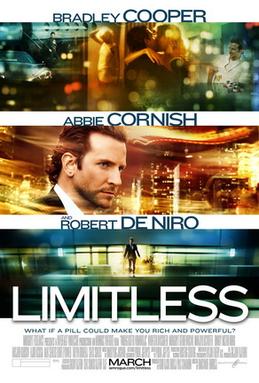
Last saturday was my last day at MONA. I have been taking the MONA pill for a year now and the course has made me realise a lot about myself that was latent. Drugs are inherently replicants or cocktails of natural neurotransmitters. External non-chemical stimuli like music or visual arts can have a drug like effect by triggering secretion of certain neurotransmitters. You do not have to take a pill to go to sleep, put on the sound of a water fall or your mother's heart beat and your body will learn that it is now safe to stop defending its existence and renew - sleep. Like the drug in the movie Limitless, the MONA drug works best on people who are already quite smart.

Without going into details of how things work I will recount my only verbal encounter with David Walsh, apparently formerly called Glenn. I was hanging out with a couple I had met at the museum, Perth town planner and his Fiancée - an artist and an air hostess with Qantas. We managed to miss the last boat while chatting at the wine bar and called a cab. Eventually a cab arrived, it was the wrong company in retrospect. We hopped in the back seat, it was apparently a cab David had called. He walked in, graciously let us ride in the back seat and cab share. He said - "You were visiting my place" , and realisation dawned. A lot of babbling ensued, I don't recall the exact details, but I do remember David saying - "I am a Mathematician". That explains everything.

Let no man who is not a Mathematician read the elements of my work. - Leonardo da Vinci.