Showing posts with label phd. Show all posts

Sunday, February 19, 2012

The Tea Pot PhD in Arts vs Engineering

On one of my many trips to MONA, I was introduced to the term "Tea Pot PhD" by several pedagogy researchers travelling to the museum. They hold PhD's in humanities and the tea pot PhD is defined as one in which someone makes something apparently trivial (from a modern day mass-manufacturing perspective), say a tea pot and expounds in detail regarding the artistic and technical processes involved in making it in the body of their thesis. The term is used in a derogatory sense implying lack of originality and critical thinking. Such an approach is considered a short-cut to being awarded a doctorate.
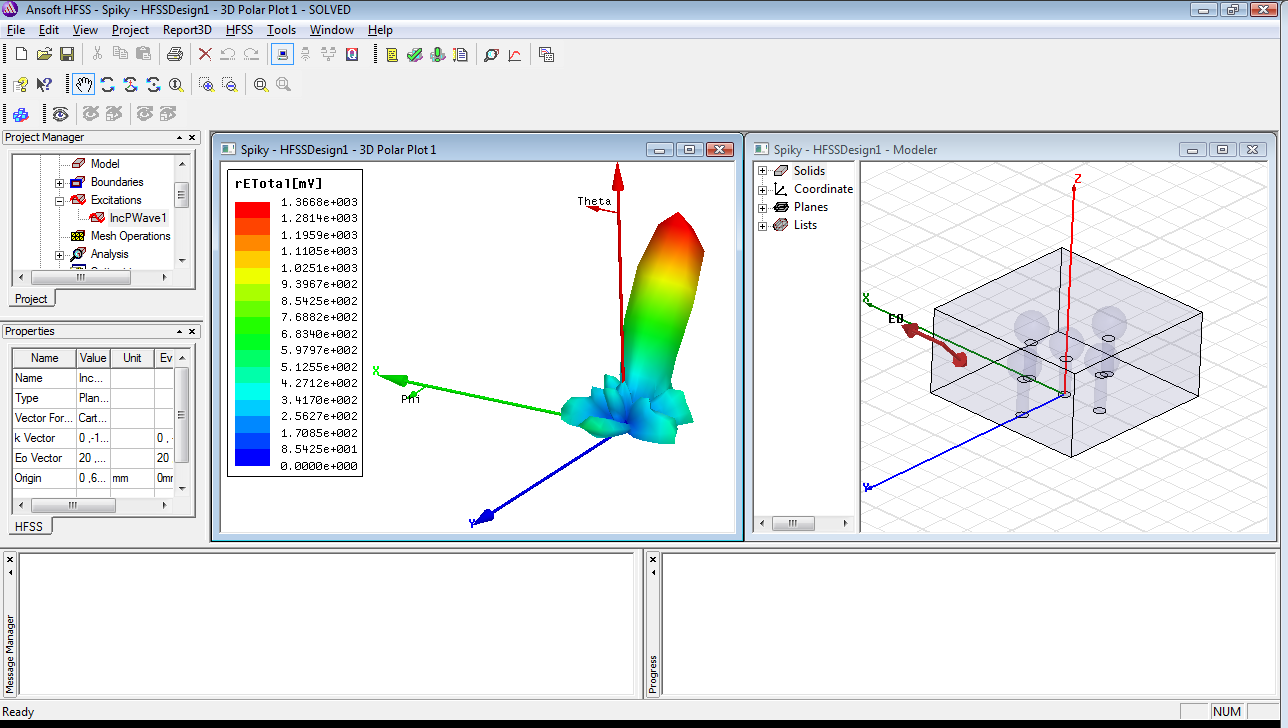
As an engineering PhD student, the tea-pot PhD sounded like one of the most difficult sort of PhD's to undertake. As I have seen numerous PhD candiadates take the long arduous road towards a practical application oriented PhD as opposed to a complex numerical/analytical modelling based solution where they churn out bits of Matlab or Python code - which ever is the flavour du jour. The arrival of rare components such as materials for a Terahertz oscillator, dielectric for a special patch antenna or a bunch of antennas and digitiser cards for a Noise MIMO radar can hold up progress for years. In my particular case I had significantly alter my research path since the Single pass Quad-pol airborne L-band interferometric radar I proposed to work with did not materialise, and eventually the small company I was working for had a sad demise.

Performing field work, coordinating satellite data takes and finally closing the loop using theory and experimental validation takes a quite a bit of effort. This can be compared to preparing and pouring tea. As opposed to designing the teapot/radar instrument itself. I am surprised that fine arts which are supposed to encourage creativity and aesthetics is biased against the creative process itself and focuses on the critical aspects instead. Engineering is all about creating working systems and transitioning pure science to more applied aspects, creating products which are of real use to the society. Admitted a lot of the engineering I indulge in is like playing with early days of X-ray, we get a different view of the planet, but we haven't quite worked out how to diagonise the fractures using the imagery. This does not automatically imply that the building such systems is pointless.

After all I am only doing a PhD in - "watching grass grow from space using flash photography with microwave ovens".


“Critics are like eunuchs in a harem; they know how it's done, they've seen it done every day, but they're unable to do it themselves.”
― Brendan Behan

Tuesday, December 6, 2011

Time to move on and finish something

I recently resigned from my position at CSIRO. It was a great year but things were not working out. Peter Oke my bosses boss puts it like this:


"
I'm glad that we had the chance to discuss things with you and to understand your reasons for leaving. I recognise that finishing your PhD while working full time is very challenging, and that being away from family and friends is also difficult. So I understand and accept your reasons for leaving.
"

I managed to learn a lot in this year. Particularly about NetCDF vagaries - it is a bucket, just stick some labels on and put bits in it. It so reminds me of formalin filled viscera buckets we used to have in CMC SFI (the CPM's students' wing) Hostel, labeled - lungs, hearts, guts etc. I learnt some thing about the data collection, assimilation and simulations which produce these nasty monolithic and often badly labelled NetCDF beasts. Some of the nicer output comes from SHOC, XBEACH and ROMS.

It is now time to head back to the electromagnetic world and do some microwave bending. I have a bit to code and write up on Chapter 3 of my thesis. Concerning mostly 2D FDTD modelling of tree stands with open canopy and resultant impact on the scattering centres at different polarisations. Since I have chosen to use MEEP, this will involve learning some more Scheme.

Tuesday, November 16, 2010

AR2C Opening Ceremony - TechTalkFest

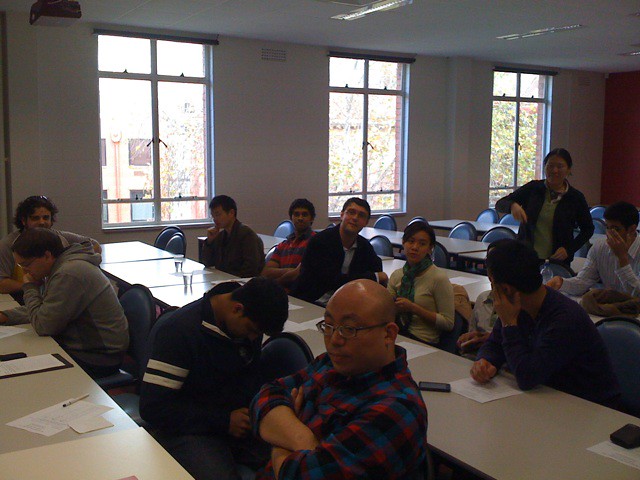
Yesterday we had the day long Adelaide Radar Research Centre opening ceremony. A self-funded collaborative research centre directed by my PhD supervisor Doug Gray. The talks ranged from highly theoretical to commercial to what reduced to a company ad (even though the speaker promised to not make it so).

I found the first talk most interesting, probably beacuse I was most attentive at the beginning of the day and it presented an irrevocable commercial success of Radar research. GroundProbe discussed their mine wall stability radar and how it came into being from concept to highly user friendly truck mountable versions.

The next talk was from Simon Haykin, dealing with the superbly abstracted Cognitive Radar. He kept drawing parallels with the visual brain and talking about layers of memory and feedback. At the end of the day, one of my colleagues asked if the Cognitive Radar is paralleled by the visual brain then where is the transmitter ? Auditory brains of bats might have been a better analogy.

The last talk before lunch Marco Martorella talked about ISAR and how ISAR techniques can be used to sharpen up blurred SAR images of targets under motion, such as moored ships rocking. However the ISAR results seem to flatten the image to a given projection plane and issues concerning 3D structure estimation came up. There seems to be no acceptable solution to this yet. May be some of the work done in Computer vision can help in this regard, particularly Posit and friends.

The energy level dropped a bit after the lunch break. Several people from DSTO took off to get back to work, some came in. The mixture in the audience changed slightly. The afternoon talks covered Raytheon, BoM and the Super-DARN system.

The guy from Raytheon talked about their huge scope in Radar systems, from the tiny targeting radars in aircrafts to GigaWatt beasts which require their own nuclear power plant. As well as their obsession with Gallium-Nitride and heat dissipation.

BoM fellow talked about the weather radar network which we have all come to know and love. Starting from the origins in World War II to the networked and highly popular public system it is today. They seemed to have a projective next hour forecast of precipitation along the lines I had imagined before, but only for distribution to air-traffic control and such.

The last presentation about SuperDARN had the most animated sparkle I have seen in a Radar presentation. It featured coronal discharges from the sun, interactions with the Earth's magnetic field (without which we would be pretty char grilled) and results of the fluctuations in the polar aurora.

Overall it was pretty interesting and diverse day. At the end of the day we were left discussing the vagaries of finishing a PhD and the similarities to Xeno's Paradox.

Wednesday, August 11, 2010

Writing PhD thesis and living in a hole

I have finally moved house to a crummy student digs to go with the PhD writing mood. Most of my time is spent with WinEdt and latex syntax. I might think of switching allegiance to LyX since Bibus has added Lyx support, I wonder if it will mangle my tex files into LyX specific format.

I have also been doing some TerraSAR-X quad-pol data analysis and comparing decomposition results to dual-pol case. There is a very nice overlap, but some things seem more coherent when the cross-pol scattering is not taken into account - in my case tree trunks standing on water.


I did manage to sneak in some time for open-source and check out the great work Manuel is doing to incorporate Monteverdi support into Qgis. Monteverdi can pull the layers from Qgis open files list and process them. The results currently cannot be passed directly from Monteverdi into Qgis. This issue can be solved by using a custom otbprovider which pushes Monteverdi streams into the QGis view by producing an appropriate QImage.

We have also been wondering whether an application is running inside our outside a NAT, what would be the best way to check this. Say ping an external server outside the NAT and see which source address the request came from, if the source is one particular IP (we have a static IP) then we are inside NAT and need to use internal IP's to connect to certain servers, otherwise we are outside and public IP is fine.

Wednesday, July 28, 2010

Writing Thesis - The easy way and the hard way

I wrote my PhD proposal, some 40 pages with nearly 70 references in OpenOffice. Outline numbering and Bibus based referencing worked out quite well for me. There were some tricky times with equations and such but I managed to keep it all together in the end.

Now I am facing a much larger task of writing a few hundred pages. So I started at the obvious point, adding pages to my proposal. Ideally the proposal should form the first chapter regarding background, before I delve into my core research. After 15 pages or so my outline numbering began to fall apart and I decied to look elsewhere for a more reliable solution.

So far Miktex with WinEdt has been doing the job remarkably well. The bibiliography comes in from Bibus as a management tool in bibtex format. Terms can be managed using the glossary tools - which I haven't managed to persuade into action so far. Google docs can be repurposed to be an online sandbox for the thesis with LatexLabs. Python code listings can be included using this trick. Overall all the pieces are in place to write it , now just need the words and pictures.

Friday, June 4, 2010

Coming close to beating Alzheimers - Runners up in school 3MT

We had a small 3 Minute thesis competition today for Electrical and Electronic Engineering school. We had more contenders than any other school in engineering. Either we must do the most interesting stuff around or we are the most foolhardy. The winning presentation discussed the possibility of definitive diagnosis of Alzheimer's Disease using Terahertz spectroscopy. Gretel engaged the audience and demonstrated real commitment to her research. Luke won the people's choice award and 2nd runner's up with his quickfire presentation on MIMO RADAR and how it can prevent your car from being hit by missiles while it is speeding down the runway trying to fly.

I am neither the most popular and nor the best presenter according to the judges, but I can still present at the Engineering, Computer Science and Maths heats for a spot in the University wide 3MT round. I was the 1st runner's up with my spill on the penguins. Here is the text as it was first written, what came out of my mouth at the presentation I don't know myself.

If you have seen happy feet you may think that all penguins live on ice, but this is not the case. These royal penguins live on the rocky and muddy shores of Macquarie island in the sub-antarctic which is administered by Tasmania. Apart from the penguins there are 20 to 40 scientists from Australian Antarctic Division and about 100,000 rabbits. Rabbits were introduced by the whalers in the 17th century. These rabbits eat all the vegetation on the steep slopes leaving the penguin rookeries vulnerable to landslides. The harsh terrain and harsher climate of the island makes it difficult to monitor the vegetation on foot. So the scientists turned to satellite imaging. These days everybody is familiar with satellite imagery from Google Earth, they indeed used Quickbird for a stunning image in 2007. In 2008 and 2009 however the optical sensor failed to deliver and all the images were cloudy, so the Antarctic division asked me to have a look using Synthetic Aperture Radar, TerraSAR-X. which is basically like a camera with a microwave flash which can operate at night and goes through clouds. So we had a perfect cloud free image, but like with X-ray which goes through flesh to let you see bones, the radar goes through clouds to give you a microwave view of the vegetation. Without special training people find it hard to interpret radar images. Newton said “If I have seen further it is by standing on the shoulders of giants”, I am seeing into radar by standing on shoulders on the statistics and electromagnetics giants – Gauss and Maxwell in this case. In fact on a pyramid of giants who have developed radar theory to the state it is today. My research has successfully identified the different vegetation types and the bare areas, as well as the biomass and height. The Antarctic division is planning to use this technique to track the progress of the 25 million dollar rabbit eradication program and vegetation re-establishment. My work has also been used to predict yields in various crops, such as canola and to identify cleared land in rainforests. Development of these techniques has a huge impact on how we see the vegetation covering the world.

Wednesday, June 2, 2010

Keeping a level head for 3 minutes - Arduino Razor IMU

It has been a really tough week, to cap it all off my passport has gone walkabout. On Friday my 3 minute thesis competition is coming up and I have been rattling off prattle about penguins and farmers in front of my iPhone timer. So far I either take 2 minutes or 3.5. The idea is to talk about the work on vegetation in Macquarie island while gaining sympathy points for trying to save wildlife. SAR is difficult to interpret by humans and we stand on the shoulders of statistics and electromagnetics founders such as Gauss and Maxwell. Ultimately the full importance of vegetation parameter retrieval.

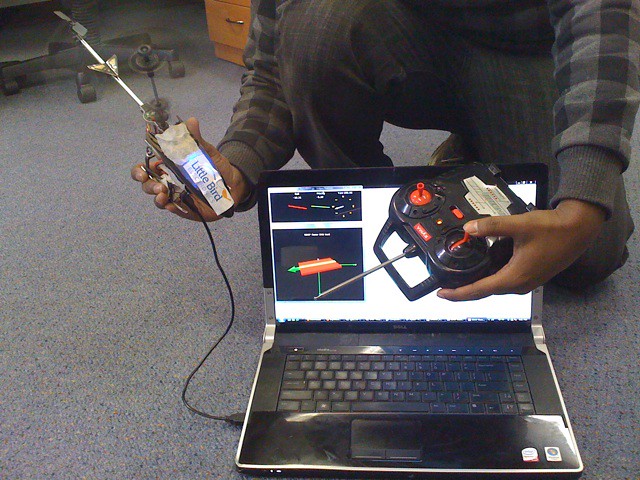
If I can keep a level head for 3 minutes then it should not be too hard for an Arduino to give me 50 stabilized attitude readings per second. I recently acquired the 9DOF Razor IMU and works quite nicely with the supplied Python scripts. I attached to my heli and flew it around a bit, no major pushes due to the magnets in the motors. Next I will attach an Xbee to it and stream the attitude data out of the heli.

Tuesday, January 12, 2010

Writing top-down bottom-up and round and round

I had a crucial meeting with my PhD supervisor today. I basically declared that I have fiddled about long enough and I am now writing my thesis. I have about 300 days to go and University policy dictates a thesis 80,000 words or so.

I will have to approach this from many directions, a bottom-up approach will be to write 300 words per day consistently, this will form the oodles of clay that needs to be pushed around to give the thesis body. Top-down approach my supervisor recommended was to structure my thesis with chapters and sub-headings and write 2-lines about each sub-heading, this will come to about 2-pages and form the armature of the thesis.


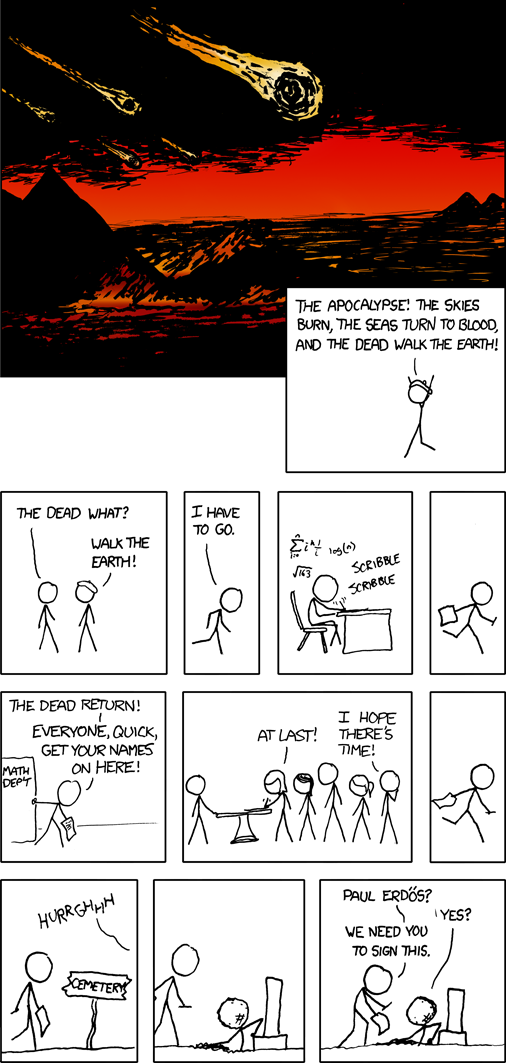
People do their PhD's on a single track and their theses are like great big towers. Some collaborate widely like Erdos and end up PhD's which look like the Savannah ( I was going to say sahara but that is not true, there are splashes of greenery). Mine is ending up like a Nautilus, starting from a point, fidgeting about and organically growing in spirals.